

What a Home Inspection Is Not
Anyone who’s been inspecting houses for even a couple of months have had some version of this exchange.
Buyer: We just had this unexpected thing happen. Looking at your report, I saw you said the thing was fine.
Inspector: Yes, on the day of the inspection, it was functioning correctly.
Buyer: But I thought that meant it was good to go.
This, or some version of it, almost always stems from one of the five biggest misconceptions about what home inspections are. Sometimes, these questions surface at the kitchen counter while the inspector is reviewing the report. Usually though, they come up days or even months later. “I thought you were going to…,” the buyer says, followed by a statement that is usually reasonable, occasionally hopeful, and almost always outside the scope of what a home inspection actually covers.
Going into your inspection with a more complete understanding of the process, purpose, and protections a home inspection can help. But, in the interest of clarity, it can also be helpful to recognize these five things a home inspection is not.
1. A Home Inspection Is Not a Guarantee
Things break. Air conditioner thermostats fail. Refrigerator compressors conk out. Roofs start to leak. While a home inspection tells you what’s what on the day of the inspection, that’s not a promise nothing will break, leak, fail, or surprise you after closing. One big reason: Houses are not static objects. Your home is under constant stress from any number of sources. Weather, age, regular use, and more than a few DIY-projects-gone wrong happen. Things that work today can stop working tomorrow. Sometimes they do so spectacularly.
Your home inspection is not a guarantee against failure. It’s a snapshot in time, captured under normal operating conditions on a specific day. It is not a warranty against the future, nor is it insurance against the normal wear and tear of daily life, or even against entropy. Your home will continue to age, and it will do so whether anyone is watching or not.
2. A Home Inspection Is Not a Code Compliance Inspection
Tennessee homeowners are protected by some of the most stringent building codes in the United States. These codes provide occupants with peace of mind they’re as safe as possible. But…
Home inspectors are not code inspectors. We’re not there to enforce building codes–or even to assess them. We also can’t force the seller to bring a home up to current standards. Building codes change constantly, and many homes were built under rules that no longer exist. That does not make them unsafe by definition, nor does it obligate anyone to retrofit history.
If something was acceptable when it was built and remains functional, it may still be present, even if it would not be installed that way today. A home inspection evaluates condition and performance, not regulatory alignment across decades of shifting rules. Your home inspector might see something they think (or even know) is a code violation. They might mention it. But they aren’t required to. Nor will they necessarily know, either. Our expertise is in function, not construction.
3. A Home Inspection Is Not Invasive
When a home inspector steps out of their truck, that’s the start of the inspection. In fact, some home inspectors say the inspection starts before they get out of the vehicle. You can see a lot from the driveway. A sagging roof could be signs of any number of underlying conditions. A wet driveway on a dry summer’s day could mean a water leak under the home or underground. Notice a pattern?
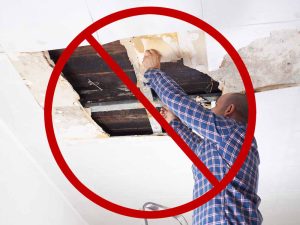
These are visual observations. Home inspections are not invasive. Your inspector cannot open a wall. They can’t pop up flooring or even scoop out the insulation. They don’t cut holes or dismantle systems. The work is visual and non-destructive by design. Think about it this way: If you were selling your home, would you want someone wandering through with a sledgehammer, a pry bar, and a Sawz-All? Of course not!
That being said, this can be frustrating for people who want certainty where only probability exists. Unfortunately, certainty requires demolition, and demolition tends to complicate real estate transactions in ways no one enjoys. The inspection looks at what is accessible, not what would require a saw.
4. A Home Inspection Is Not a Cost Estimate
Regardless of the age, style, construction type, or materials of your prospective home, chances are your inspector will find deficiencies that need remediating, as well as more than a few that do not. One of the most frequent questions we get when explaining these deficiencies is, “How much is that going to cost?” Home inspectors do not price repairs, upgrades, or renovations. In fact, according to our standards of practice, we are not allowed to do so. Markets fluctuate. Labor costs vary. Materials change. The difference between a simple repair and an expensive one is often discovered halfway through the job.
More importantly, estimating is its own discipline. Most likely, your home inspector has little, if any, experience doing cost estimations, and pretending otherwise helps no one. Any numbers attached to a report after the fact have to come from someone else, and for good reason. An inspection identifies issues. It does not assign them a dollar value.
5. A Home Inspection Is Not a Perfection Checklist
We want our home to be free from defect, perfect, safe. We also want to know what problems with our home might mean for the long run. Understanding that a home inspection is not a perfection-seeking process can help establish not only a clear expectation for the inspector and their work. It comes down to one fact:
A home inspection report is not a condemnation of a house, nor is it a roadmap to flawlessness. Every home, including new ones, has deficiencies. Some are defects. Many are simply maintenance notes. (Like clean that gutter. Seriously. Easy task and a good one for those crisp, Tennessee Spring mornings.
Deficiencies or even defects do not mean the house is failing or secretly plotting against you. It means it exists in the real world, where gravity, moisture, and time eventually win small battles. Learning which of those battles matter is part of ownership.
Knowledge Guides Expectations to Outcomes
None of this is meant to diminish the value of the home inspection process. Home inspections are a vital tool in assessing the decision to purchase a home. Misunderstandings usually arise not from negligence or deception, but from expectation drift. Buying a home is stressful, expensive, and emotionally charged. It’s natural to want one document to answer every question and eliminate every risk.
But, instead, a home inspection has boundaries for a reason. Knowing where those boundaries are tends to make the rest of the experience clearer, calmer, and, in the long run, far more useful.